



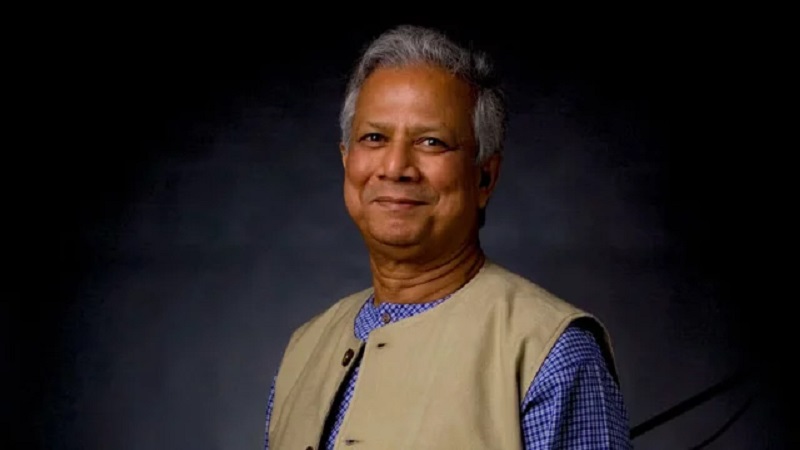
In the intricate tapestry of Bangladesh’s history, few threads are as vibrant and enduring as that of Muhammad Yunus. Revered globally as a Nobel laureate and pioneer of microfinance, Mr. Yunus’s vision is as expansive as it is revolutionary. It’s not just about lifting people out of poverty; it’s about challenging the very systems that perpetuate inequality, environmental degradation, and social injustice.
A Legacy of Laurels: More Than Just Accolades
With a shelf lined with the world’s most prestigious awards- the Nobel Peace Prize, the Presidential Medal of Freedom, the Congressional Gold Medal-Mr. Yunus is not just a figure of admiration; he’s a force of change. These honors, however, are not mere ornaments; they symbolize the recognition of ideas that have dared to push the boundaries of what is possible. They are the world’s nod to a man who has turned conventional wisdom on its head and reshaped the narrative of economic empowerment.
Capitalism with a Conscience
In a world obsessed with profit margins and quarterly earnings, Mr. Yunus dares to ask: What if capitalism was about more than just money? His vision is one where businesses serve a higher purpose, where profit is a means, not an end. This is capitalism with a conscience, where the bottom line is measured not just in dollars, but in lives improved, communities uplifted, and environments preserved. Imagine a world where every business is a social business, reinvesting profits to solve the most pressing issues of our time—healthcare, education, clean energy. It’s a bold reimagining of the economic landscape, one that places human dignity and environmental sustainability at the core.
Youth: The Architects of Tomorrow
For Mr. Yunus, the future is not something to be predicted; it is something to be created, and it is the youth who will wield the tools of creation. He sees the young people of Bangladesh not just as participants in the economy, but as architects of a new social order. In a country where traditional career paths have long been seen as the safe bet, he urges the youth to take risks, to innovate, to build businesses that matter. He envisions a generation of entrepreneurs who are driven not just by the lure of profit, but by the desire to make a difference, to leave the world better than they found it.
Green is the New Growth
Economic development, in Mr. Yunus’s view, should not be a trade-off with environmental stewardship. He envisions a Bangladesh where growth is green, where the march toward progress is powered by renewable energy and guided by a deep respect for the natural world. In this future, Bangladesh is not just another developing nation on the global stage; it is a leader in sustainable development, a model for how a country can rise without leaving its environment-and its people-behind. The Inclusivity Imperative In a world where the gap between the haves and the have-nots continues to widen, Mr. Yunus’s vision of inclusive prosperity is a clarion call for change. His work with Grameen Bank has shown that the poor are not a problem to be solved but a potential to be unleashed. Through microloans, millions have been given the chance to break free from the chains of poverty, to start businesses, and to improve their lives. But for Mr. Yunus, this is just the beginning. He believes that true prosperity is not just about economic growth; it is about ensuring that every citizen, no matter how marginalized, has access to the opportunities and resources they need to thrive.
Navigating Controversies: The Challenges of Change
Of course, no vision of change is without its challenges. Mr. Yunus’s relationship with the Bangladeshi government has been fraught with tension, and his work has faced criticism and legal scrutiny. Some argue that microcredit is not a panacea for poverty and that it can even perpetuate cycles of debt. But Mr. Yunus is undeterred. He understands that change is messy, that it often meets with resistance, but he remains committed to the belief that empowering the marginalized is the surest path to a more just society.
Beyond Bangladesh: A Global Vision
Mr. Yunus’s ideas are not confined to the borders of Bangladesh. His vision has inspired a global movement, influencing policymakers, academics, and social entrepreneurs who are rethinking the role of business in society. His legacy is one of hope, of the belief that a better world is not just possible, but within our reach if we are willing to work for it.

A Nation at a Crossroads
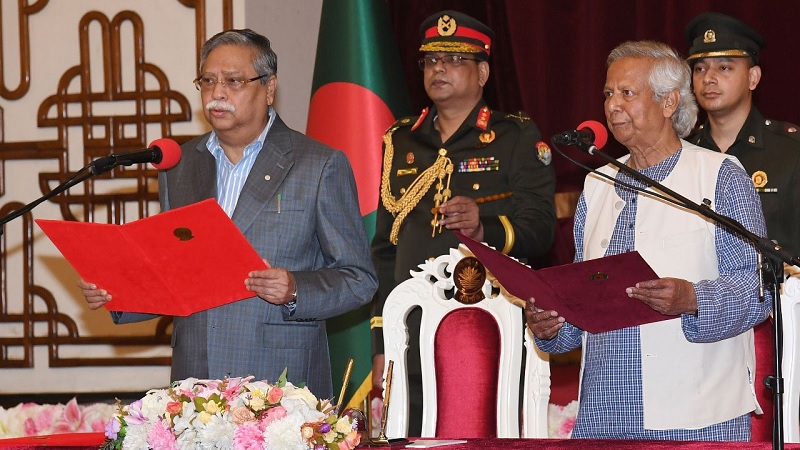
As Mr. Yunus steps into his new role as Bangladesh’s Chief Adviser in 2024, the nation finds itself at a crossroads. The resignation of Prime Minister Sheikh Hasina amid widespread protests has opened the door to new possibilities, but it has also brought uncertainty. Mr. Yunus’s vision for redesigning the financial system in the Global South, with a focus on social justice, environmental stewardship, and youth empowerment, offers a beacon of hope in these turbulent times.
The Future: A Vision in Motion
The future of Bangladesh, as seen through the lens of Mr. Yunus’s vision, is not a distant dream; it is a vision in motion. It is a future where economic growth is balanced with social equity, where environmental sustainability is not an afterthought but a guiding principle, and where the youth are not just the future but the present, leading the charge for a better tomorrow. It is a future that, while uncertain, is filled with the promise of a more just and inclusive society, one that Bangladesh-and the world-desperately needs.